Canberra works best when you stop treating it as a checklist of national institutions. Choose two major indoor anchors, give each a proper half-day, and use the lake, gardens and neighbourhoods to reset between them. The result feels like a city break rather than an excursion.
Why Canberra deserves a full weekend
The capital's scale can be deceptive. Parliament House, the Australian War Memorial and the major galleries look close on a map because Walter Burley Griffin's central axis ties them together, but the lake, broad avenues and large institutional footprints add real travel time. Trying to see every national collection in two days usually produces more parking than understanding.
A better first visit pairs one civic institution with one cultural collection, then adds an outdoor contrast. That might mean Parliament House and the National Gallery on Saturday, followed by the Australian War Memorial and Mount Ainslie on Sunday. Families may prefer Questacon and the National Museum; garden lovers can swap a gallery for the National Arboretum or Australian National Botanic Gardens.
Start with Parliament House
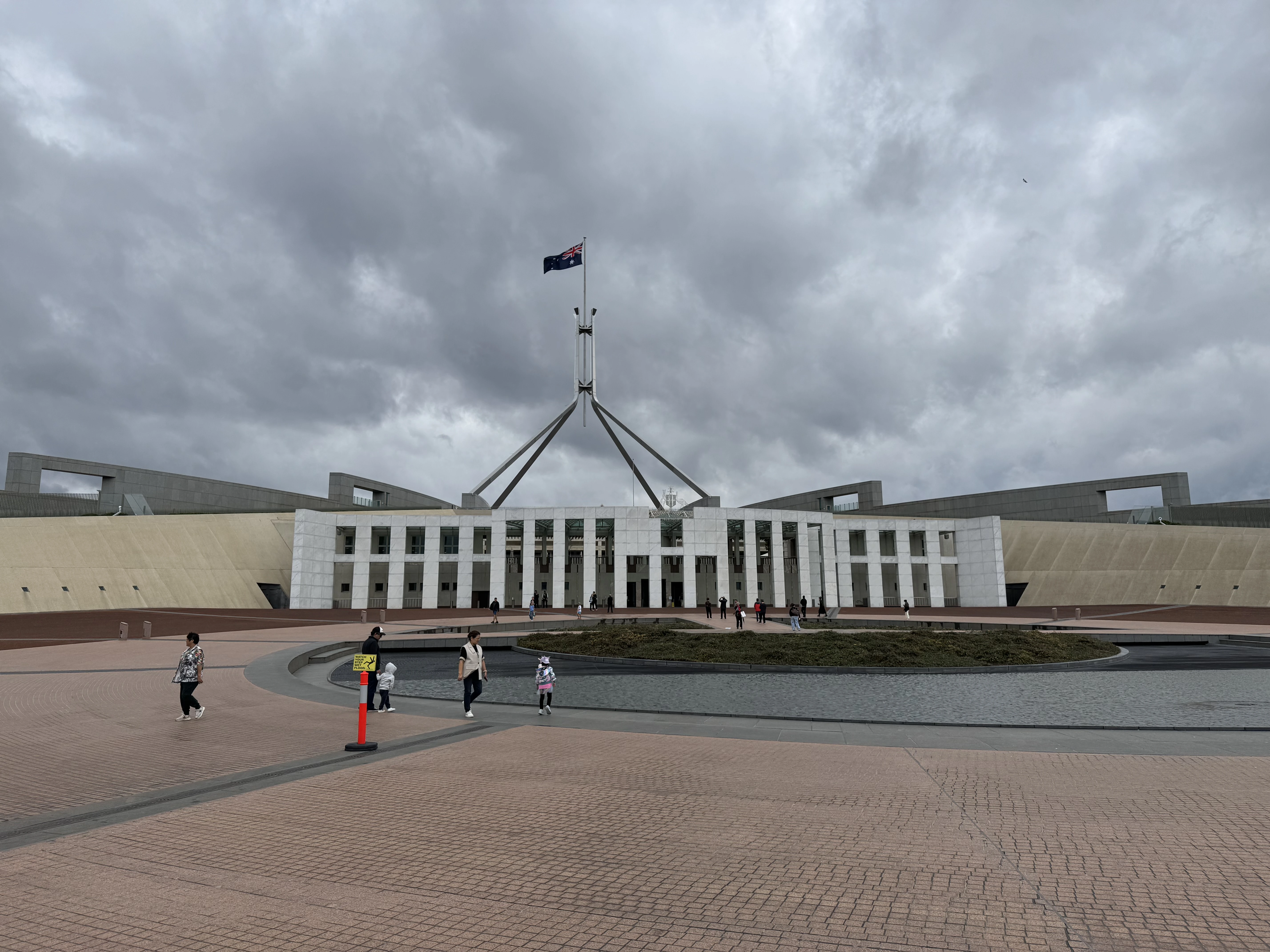
Australian Parliament House is the clearest introduction to Canberra's planned landscape. From the forecourt, the building sits within Capital Hill rather than simply on top of it. Inside, public areas connect the Great Hall, marble foyer, chambers and exhibitions to the daily work of Parliament. When the building is sitting, access and gallery arrangements can differ, so check the official calendar before arriving.
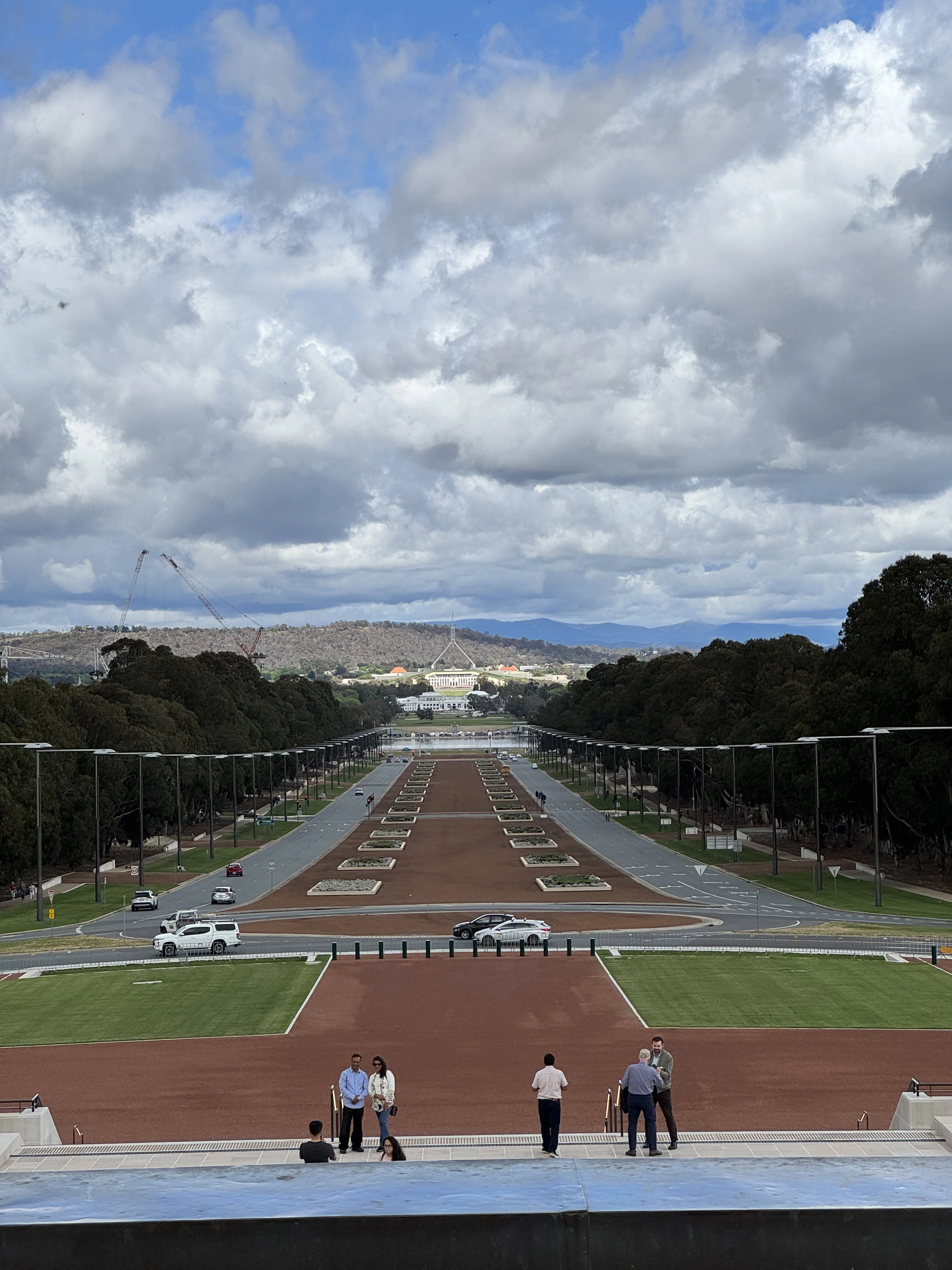
General admission is free, although special tours and events may carry a charge. Security screening applies, and parking conditions are time-limited, so leave margin around any booked tour. After the visit, use the elevated outlook to trace the Land Axis across Old Parliament House and Lake Burley Griffin to the Australian War Memorial.
Give the Australian War Memorial time
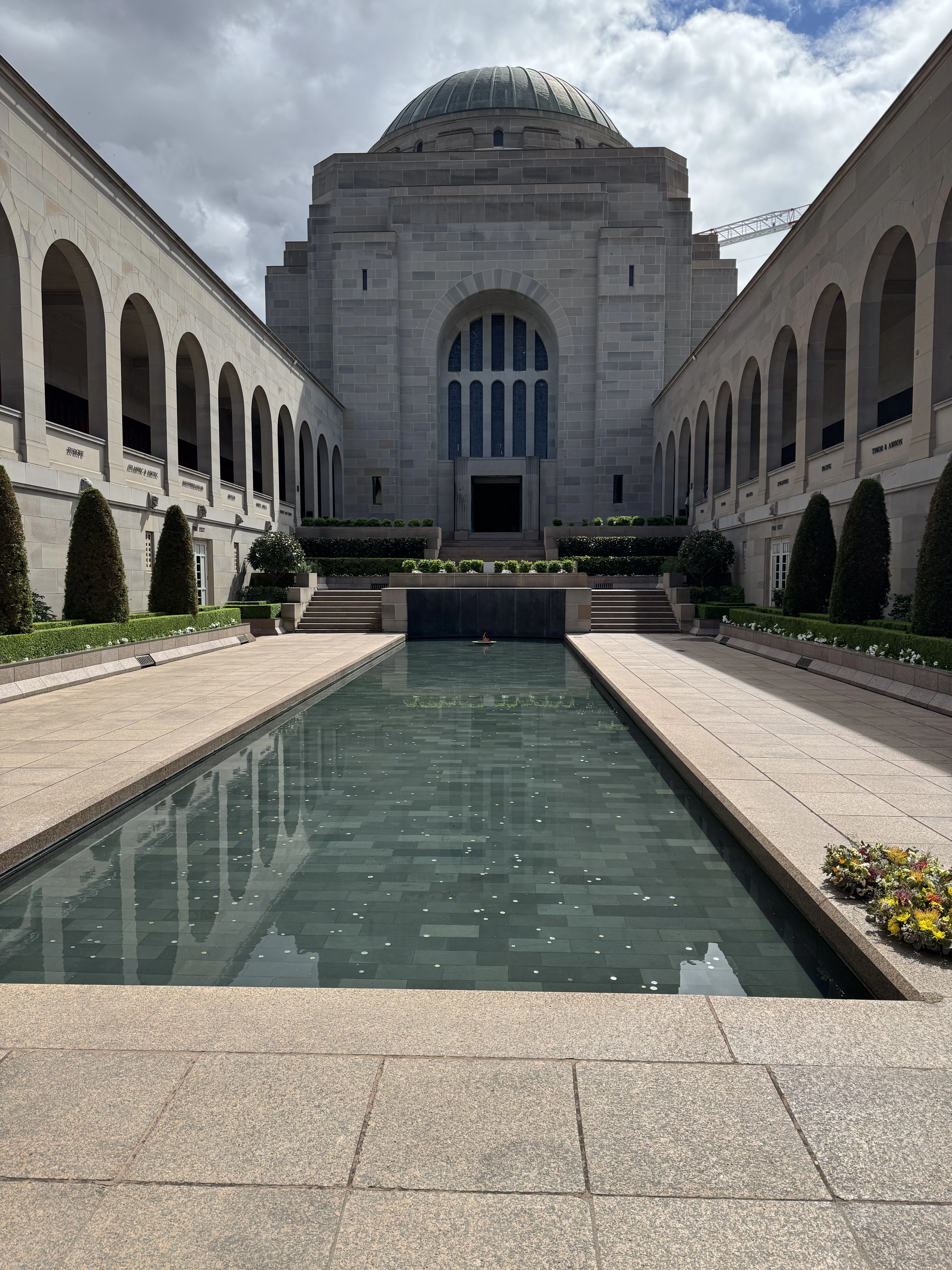
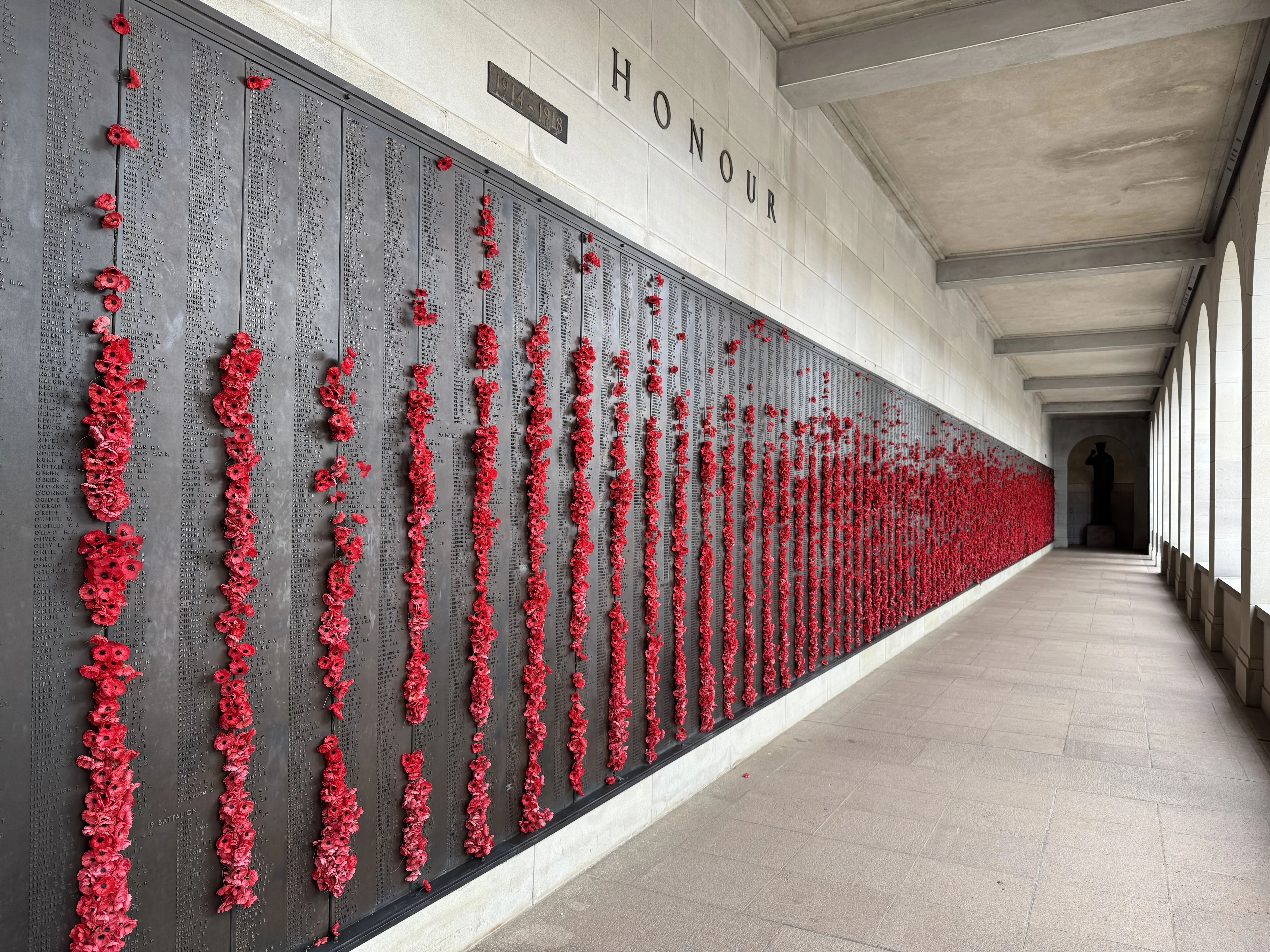
The Australian War Memorial combines a commemorative place, museum galleries and a research collection. Begin in the Commemorative Area rather than hurrying straight to displays. The Pool of Reflection, Hall of Memory and Roll of Honour establish the purpose of the site and ask for a slower, more respectful pace.
Entry is free and the Memorial currently advises that general tickets are not required, but redevelopment work can alter routes and gallery access. Check the current visit page before the weekend. The daily Last Post Ceremony begins at approximately 4.30 pm and tells the story of one person named on the Roll of Honour; arrive early if it is central to your visit.
Choose one national collection
Best for art and the compact Parliamentary Triangle. General admission and the Sculpture Garden are free, while selected major exhibitions are ticketed. Capital works through 2030 mean some spaces and outdoor works may be temporarily unavailable.
Choose this for a broad sweep of Australian stories and a striking lakeside building. General admission is free, though some exhibitions and family experiences are ticketed. The Acton setting also connects well to a lake walk.
Old Parliament House is the natural companion to the current Parliament. It adds political history, historic chambers and exhibitions without leaving the Parliamentary Triangle.
The National Science and Technology Centre is the family-focused choice. Sessions and admission arrangements can sell out in busy periods, so check availability before building the day around it.
Do not choose by reputation alone. Check current exhibitions, then select the institution where the group will willingly spend two or three hours. The National Portrait Gallery and National Library are close enough to substitute if their program is a better fit.
Use the outdoors to change the pace
Lake Burley Griffin's shared paths offer the simplest reset after a museum. The central bridge-to-bridge loop links Commonwealth Avenue and Kings Avenue through the Parliamentary Triangle and lakeside parkland. Allow more time than the distance suggests if you plan to add the National Gallery's Sculpture Garden, the National Library forecourt or a coffee stop.
For a broader view, drive to the National Arboretum Canberra, where the Village Centre overlooks the city and walking routes move through forests and gardens. The grounds and indoor collection operate on different schedules, paid parking applies around the Village Centre, and there is no regular public transport to the Arboretum. Mount Ainslie is the classic alternative for a direct view down Anzac Parade, but check conditions and closures before setting out.
Where to stay
City centre and Braddon
Best for: first visits, dining and light rail.
This is the easiest base for restaurants and an evening without the car. The major national institutions are not all walkable from here, but buses, taxis and short drives are straightforward.
Barton and the Parliamentary Triangle
Best for: Parliament, galleries and quiet evenings.
Stay south of the lake to put the national institutions close. The trade-off is less street life after office hours, so check the distance to dinner rather than assuming every nearby precinct is an easy walk.
Kingston and Manuka
Best for: cafes, lake access and a neighbourhood feel.
These inner-south areas balance dining with access to Parliament and the lake. Kingston Foreshore is lively and scenic; older Manuka and Kingston streets feel more established and low-key.
Getting there and getting around
From Sydney, allow a broad three-to-four-hour window via the Hume and Federal highways. Traffic, roadworks, weather and your departure suburb matter more than the optimistic map time. Our Sydney–Canberra stops guide compares Berrima, Goulburn and Lake George without turning the drive into a full-day itinerary.
Canberra's centre is easy to navigate, but the attractions are spread across several precincts. A car is convenient for the Arboretum, Mount Ainslie and accommodation away from the centre. For the civic core, Transport Canberra buses and light rail use the MyWay+ system, which accepts contactless bank cards as well as travel cards. Tap on and off with the same payment method.
Walking and cycling work particularly well around the lake and within each attraction cluster. They work less well as a universal solution when the itinerary jumps between the Parliamentary Triangle, War Memorial, Arboretum and dinner precincts in one day.
A practical two-night itinerary
Arrive and stay local
Check in around the city, Braddon, Kingston or Manuka and explore that neighbourhood on foot. Keep the first night free of timed attractions so motorway delays do not derail the weekend.
Follow the Parliamentary Triangle
Visit Parliament House in the morning, then choose the National Gallery, Old Parliament House, Questacon or another nearby collection. Finish with a section of the lake foreshore and dinner in Kingston, Manuka or Braddon.
Make room for commemoration
Start with the National Arboretum, Mount Ainslie or a lake walk, then give the Australian War Memorial the afternoon. If attending the Last Post Ceremony, plan the return drive carefully or add Sunday night rather than leaving tired after dusk.
When to go and what to pack
Canberra has distinct seasons. Winter mornings can be frosty and cold, summer afternoons can be hot, and spring brings major garden events as well as heavy demand on selected weekends. Autumn colour is a draw in its own right. Always compare the forecast for Canberra rather than using Sydney as a proxy.
- Pack layers and a wind-resistant outer layer outside summer.
- Bring comfortable shoes for large buildings, paved forecourts and lake paths.
- Check sitting dates, exhibition tickets and institutional closures before locking the itinerary.
- Allow for security screening at Parliament House and respectful time in commemorative spaces.
- Keep one indoor collection and one outdoor walk flexible so the weather can choose the order.