Legal Protections Briefing
Break down minimum pay, safe workplace rules, and the paperwork you must keep on file.
Understand Australian workplace rights →Obtain a clear explanation of Australian contracts, pay rules, safety duties, and workplace conduct expectations. This guide summarises the laws that protect employees, the records you should keep, and the agencies that resolve issues if concerns arise.
This handbook explains the National Employment Standards, Fair Work system, and workplace safety obligations in plain language. Follow the checklists to confirm entitlements, practise respectful communication, and identify the regulators or community services that can assist when you need advice.
Break down minimum pay, safe workplace rules, and the paperwork you must keep on file.
Understand Australian workplace rights →Track leave entitlements, contract clauses, and payslip red flags with our checklist.
Check Fair Work pay and conditions →Decode Australian workplace expectations and log the helplines ready to back you.
Find workplace support contacts →Before you sign a contract or clock in, anchor yourself in the national standards that shield every worker—regardless of industry or visa type.
The National Employment Standards set minimum employment conditions, but pay rates are usually set by an award, registered agreement or the National Minimum Wage order.
You are entitled to a workplace free from physical and psychological harm.
Maintaining your own paper trail keeps you audit-ready and empowered.
Keep these entitlement benchmarks and contract checkpoints on hand when you negotiate offers or review payslips.
Check the legal and practical details before you accept an offer, especially if your visa conditions limit hours, location or employer.
Ask which award or registered agreement applies and which classification the employer is using.
Confirm ordinary hours, roster rules, breaks, location, remote-work expectations and how overtime is approved.
Check base rate, allowances, loadings, superannuation, pay frequency and payslip timing.
Understand the implications of full-time, part-time, fixed-term, and casual arrangements before signing.
Notice, redundancy and change processes depend on the NES, award or agreement, contract and employer size.
Be cautious if a business asks you to get an ABN for work that is really employee work. Fair Work explains sham contracting and how to report it.
If something goes wrong, escalate early. These official channels offer confidential advice, mediation, and representation.
Guides on pay rates, leave, visas, and anonymous tip-offs for underpayment.
Handles unfair dismissal, bullying claims, enterprise agreements, and industrial disputes.
Dedicated services for migrant, temporary, and vulnerable workers facing exploitation.
Use Fair Work's award finder and Pay and Conditions Tool. If a registered agreement applies, compare it with the role, classification and ordinary-hours pattern in your contract.
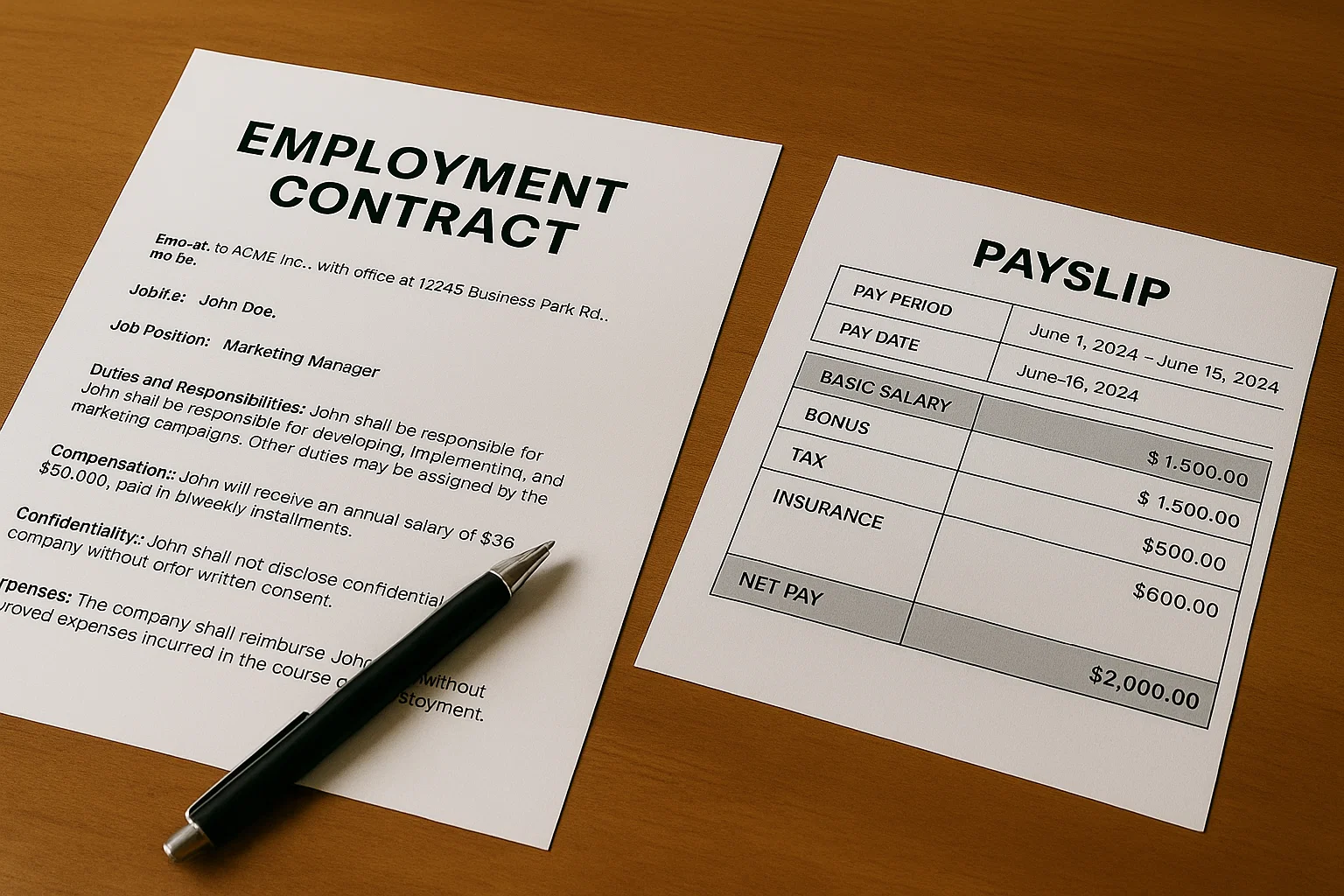
Employers must give payslips within one working day of payment. Compare gross pay, tax withheld, super, deductions, hours, allowances and leave balances with your own roster records.
Save contracts, rosters, timesheets, messages about shifts, payslips and super records. These help if you need to query underpayment or unpaid super later.
Fair Work accepts requests for help and anonymous reports. The ATO handles unpaid super. Migrant workers have workplace protections even when visa issues are involved.
Being on a visa does not remove basic workplace protections. Fair Work provides translated information, guidance for visa holders and tools for checking pay. If an employer threatens your visa, withholds a passport, asks for unpaid trials beyond a genuine demonstration of skills, or misclassifies employee work as contracting, keep records and seek official advice.
Use these quick answers to protect your rights from day one and keep your payslips compliant.
It should list your role, hours, base pay, loadings/penalties, overtime rules, leave entitlements, award or agreement coverage, probation terms, and notice periods. Avoid signing blank or undated documents.
Check the Fair Work Ombudsman Pay Calculator and your applicable modern award or enterprise agreement. Compare classification level, ordinary hours, and penalty rates against your payslip.
Employers must provide payslips within one working day of payment, even if you have left the job. Payslips must show gross/net pay, hours, super contributions, ABN, and deductions.
No. Keeping passports, charging recruitment fees, or making you pay the employer’s business costs breaches workplace and migration law. Report issues to the Fair Work Ombudsman.
Document hours and payslips, compare to award rates, then raise it in writing with payroll or HR. If unresolved, lodge a confidential report or small claim via the Fair Work Ombudsman or Fair Work Commission.